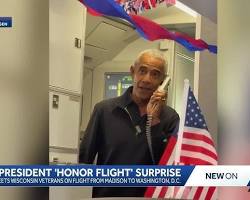
In 2025, the celebration of Veterans Day took on a renewed sense of honor and respect when former President Barack Obama made a surprise visit to greet a group of veterans and their families aboard an Honor Flight arriving in Washington, D.C. The event marked a historic milestone in national recognition of those who served during some of America’s most challenging wars of the 20th century. This essay explores the origins and mission of the Honor Flight Network, the personal and communal significance of these pilgrimages for veterans, the dramatic and heartwarming encounter on that November day, and the broader context of honoring service in America.
The Origins and Mission of the Honor Flight Network
The story of the Honor Flight Network begins with a simple yet profound idea: to honor the men and women who served in the U.S. military by giving them the opportunity to visit the war memorials built in their honor in Washington, D.C. The program was co-founded in 2005 by Earl Morse, a physician assistant and retired Air Force captain, and Jeff Miller, a small business owner with deep personal ties to military service.
Earl Morse was inspired to create the program while working at a Department of Veterans Affairs clinic in Springfield, Ohio. When he noticed many of his elderly World War II veteran patients had not yet visited the newly completed World War II Memorial in Washington, D.C., he envisioned a volunteer pilot program to fly these veterans free of charge to see the memorial. By May of 2005, six small planes flew 12 WWII veterans on the inaugural Honor Flight. This program emphasized that the veterans would pay nothing, and the volunteer pilots would personally escort and assist them throughout the trip.
Parallel to this, Jeff Miller in Hendersonville, North Carolina, conceived a similar idea to organize commercial flights dedicated to carrying veterans to the memorials. Drawing on his own family history of military service, Miller began charter flights carrying hundreds of World War II veterans. By the end of 2006, his operation had transported over 300 veterans, marking a dramatic expansion of the mission.
The two efforts merged in 2007 to form the Honor Flight Network, uniting regional hubs across the country to collectively work toward the common goal of honoring veterans. Today, the network includes approximately 131 hubs operating in 45 states, serving veterans of World War II, the Korean War, the Vietnam War, and critically ill veterans of any era. Since its inception, over 300,000 veterans have been flown to visit their memorials in Washington, D.C., at no cost to them.
The mission of the Honor Flight Network is clear and deeply meaningful—to celebrate America’s veterans by bringing them to the nation’s capital to share in a day of honor at the memorials that recognize their sacrifices and heroism. This initiative reflects a collective commitment from volunteers, donors, and communities nationwide to express gratitude toward the aging generation of veterans who made immeasurable contributions to the country’s freedom and security.
The Veterans’ Journey: A Pilgrimage of Remembrance
Each Honor Flight is a deeply emotional and transformative experience for the veterans who participate. Most of the veterans are in their late 80s, 90s, or older, many contending with health challenges that make the journey difficult yet profoundly worthwhile. The flights often include veterans of WWII, Korea, and Vietnam, accompanied by guardians who assist with mobility, health, and logistics, ensuring a safe and comfortable experience.
Departing from regional airports across the country, these veterans embark on a journey that connects the past with the present—a pilgrimage to see the memorials erected to honor their service and sacrifice. Once in Washington, D.C., veterans visit the World War II Memorial, the Korean War Veterans Memorial, and the Vietnam Veterans Memorial, among other sites. For many, it is a chance to pause and reflect on their service, to reconnect with their fellow veterans, and to bear witness to the nation’s recognition of their sacrifices.
The emotional weight of the journey is often overwhelming. Many veterans recount the mixed feelings of pride and sorrow, nostalgia and relief. Some veterans had served in combat zones marked by intense hardship, while others had faced challenges in returning home to a society sometimes less than welcoming, especially for Vietnam veterans. The Honor Flight serves as a collective acknowledgment that their sacrifices are neither forgotten nor unappreciated.
Volunteers play a critical role, accompanying the veterans throughout the day, providing companionship, and helping to ensure the experience is memorable and dignified. Communities often greet returning flights with cheers, banners, and ceremonies, further amplifying the veterans’ sense of honor and appreciation.
The Historic Surprise: Obama Meets Veterans on Veterans Day 2025
The Veterans Day 2025 event took this tradition a step further in a remarkable way. On an Honor Flight departing from Madison, Wisconsin, former President Barack Obama boarded the plane to surprise the veterans and their families en route to Washington, D.C. This visit was unprecedented—no sitting or former U.S. president had ever greeted Honor Flight veterans in person during the program’s 20-year history.
As the plane approached Reagan National Airport, Obama’s voice came over the intercom, expressing his gratitude and admiration for the veterans’ service and sacrifices. The gesture touched the veterans deeply, many of whom experienced a rush of emotions ranging from disbelief to joy. Upon landing, Obama personally greeted the veterans, shaking hands, exchanging stories, and presenting commemorative presidential coins as tokens of honor.
This personal encounter was more than ceremonial; it symbolized a deep national respect and a willingness to honor veterans publicly and personally. Veterans expressed how meaningful it was to be recognized in this way, especially those who fought in conflicts that had sometimes been overlooked or contentious in American history.
The surprise visit also resonated widely with the public, highlighting the significance of Veterans Day as a moment not just of remembrance but of active and heartfelt gratitude. Obama’s engagement underscored the vital role of leaders in elevating veterans’ stories and ensuring their sacrifices remain central to national consciousness.
Veterans Day Celebrations and Community Support
The arrival of the Honor Flight veterans in Washington, D.C., is typically met with celebrations, ceremonies, and community support. Volunteers, family members, and fellow citizens gather at airports and memorials to welcome the veterans with applause and honor. These moments are particularly poignant for Vietnam War veterans, many of whom endured a difficult homecoming after their service and now receive the admiration and respect they have long deserved.
The memorials themselves are places of silent reflection, where the names, faces, and memories of comrades lost in battle stand as testaments to courage and sacrifice. Veterans spend the day at these sites, participating in ceremonies that reaffirm their place in the nation’s history and heart.
The support from communities and volunteers reflects a broader cultural shift in how veterans are perceived and honored. From the early days of the program to the present, Honor Flights have helped transform public awareness and fostered a culture of respect, healing, and national pride.
A Legacy of Service and Recognition
The Honor Flight Network and the 2025 Veterans Day event with President Obama represent an evolving narrative of service, sacrifice, and recognition in America. They stand as reminders that honoring veterans is both an individual and collective duty—one that requires ongoing commitment to remembering history and supporting those who served.
For veterans, the journey to the memorials is often a lifetime’s aspiration fulfilled; for the country, it is an opportunity to express gratitude and ensure that these stories remain alive for future generations. The symbolic gesture of a former president joining an Honor Flight elevates this commitment, offering visible proof that the nation values its veterans and their contributions deeply.
In this way, the story of the Honor Flight and the 2025 surprise visit encapsulate the spirit of Veterans Day, a day dedicated to honoring all who have worn the uniform and fought to protect the principles upon which the United States was founded.
This essay can be further expanded by adding in-depth personal stories of individual veterans from the flight, more detailed descriptions of the memorials, a history of Veterans Day itself, interviews with organizers and volunteers, and reflections from the public and media on the impact of Obama’s surprise visit. This foundation captures the key themes and historic significance.