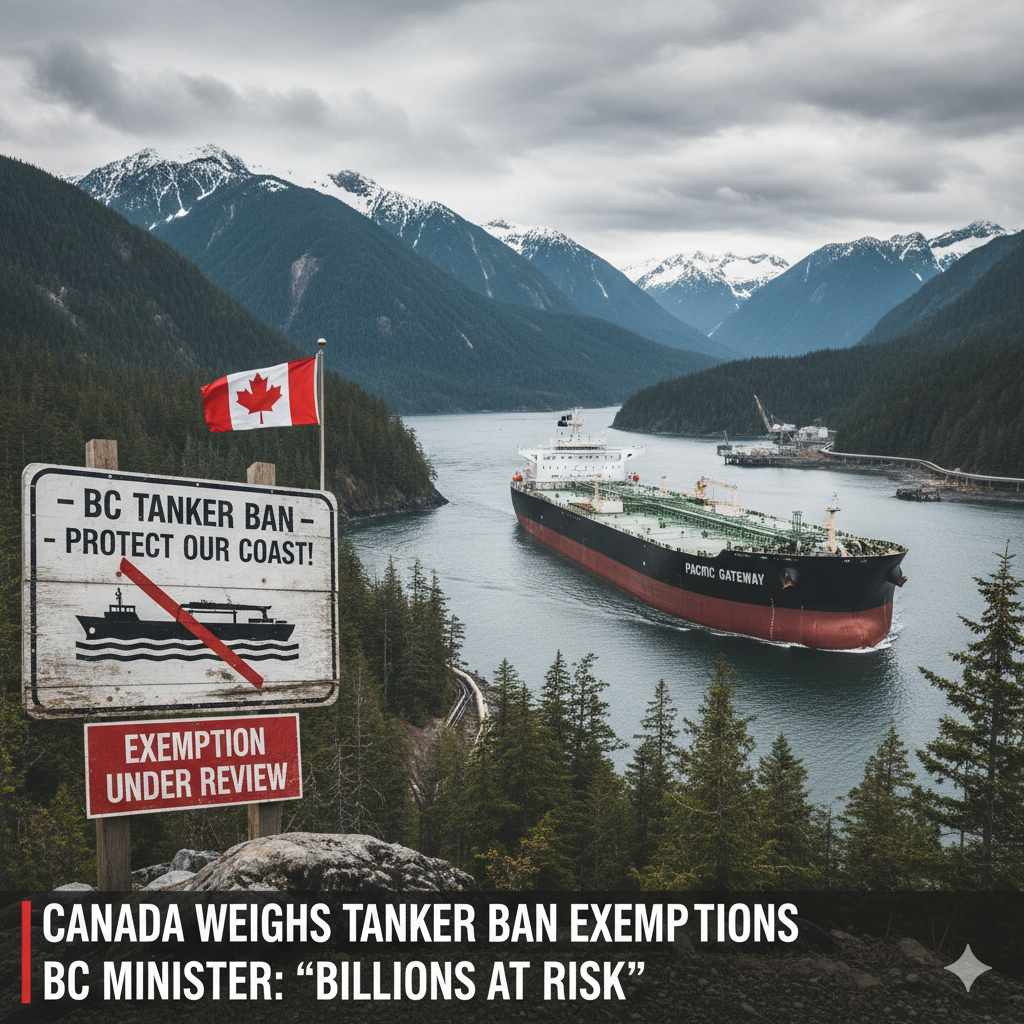
Canada is in the middle of a tense, high-stakes debate over whether British Columbia should loosen its long-standing tanker ban to make room for a potential new pipeline from Alberta to the B.C. coast. At the heart of the argument is a familiar Canadian dilemma: how to grow the economy without compromising the environment or ignoring Indigenous rights.
Context and Background
B.C.’s tanker ban was created to protect the North Coast’s fragile marine ecosystems and to honour commitments made to coastal First Nations. Under the ban, tankers carrying more than 12,500 metric tons of crude oil can’t load or unload at northern ports. This policy has been crucial in earning Indigenous support for other major development initiatives—investments that could total up to $60 billion.
Alberta, led by Premier Danielle Smith, is pushing hard for either lifting the ban or carving out exceptions so a new pipeline can reach the B.C. coast. For Alberta, the project is a chance to diversify export routes—especially to Asian markets—and to strengthen the province’s energy sector. But the tanker ban stands firmly in the way.
Political and Economic Stakes
B.C. Premier David Eby has taken a strong stance, warning that loosening the ban to support what he calls an “undefined, unfunded, and speculative” pipeline would undermine billions of dollars’ worth of real, shovel-ready projects backed by coastal First Nations. He argues that removing the ban would destroy the social license that underpins other economic developments—from mining to energy—ultimately hurting B.C.’s long-term economic vision.
At the federal level, Ottawa is being careful. Prime Minister Mark Carney has said any change to the ban would depend on key conditions: formal Indigenous consent, support from the provinces, and alignment with Canada’s climate goals. Energy Minister Tim Hodgson has called questions about lifting the ban “hypothetical,” but ongoing talks with Alberta show that the federal government is at least willing to listen to proposals.
Indigenous Consent and Environmental Safeguards
Indigenous leaders have made it clear that their consent is non-negotiable. For many coastal First Nations, the tanker ban is a critical layer of protection for their waters and communities. Some experts have floated the idea of keeping the ban in place but allowing for a stricter, more transparent exemption process—one that would require early Indigenous involvement, rigorous environmental standards, and ongoing monitoring.
Current Developments and Outlook
Negotiations are still unfolding, and there are hints that a memorandum of understanding (MOU) could be on the horizon. Such an agreement might outline the conditions for a future pipeline, narrow exemptions to the tanker ban, emissions caps, and other policy adjustments. But no concrete project proposal has been filed yet—there’s no route, no timeline, and no official environmental assessment.
For now, the federal government says any project will need both Indigenous and provincial approval and must fit into Canada’s broader climate strategy. B.C.’s firm opposition—and strong resistance from First Nations—remains a significant barrier. Meanwhile, Alberta’s push is seen by some observers as part of a wider national struggle over energy policy, economic growth, and environmental responsibility.
This debate highlights the difficult balancing act between environmental protection, Indigenous rights, provincial autonomy, federal priorities, and economic development in Canada. For B.C., the tanker ban is more than a policy—it’s a foundation for building trust and securing long-term investment. For Alberta, easing the ban could unlock major economic potential. And for Ottawa, the challenge is to navigate competing interests without undermining Canada’s climate commitments or Indigenous partnerships.
How this issue unfolds will influence not only the future of Canada’s energy sector, but also the livelihoods of coastal communities and the country’s credibility on environmental and reconciliation promises.