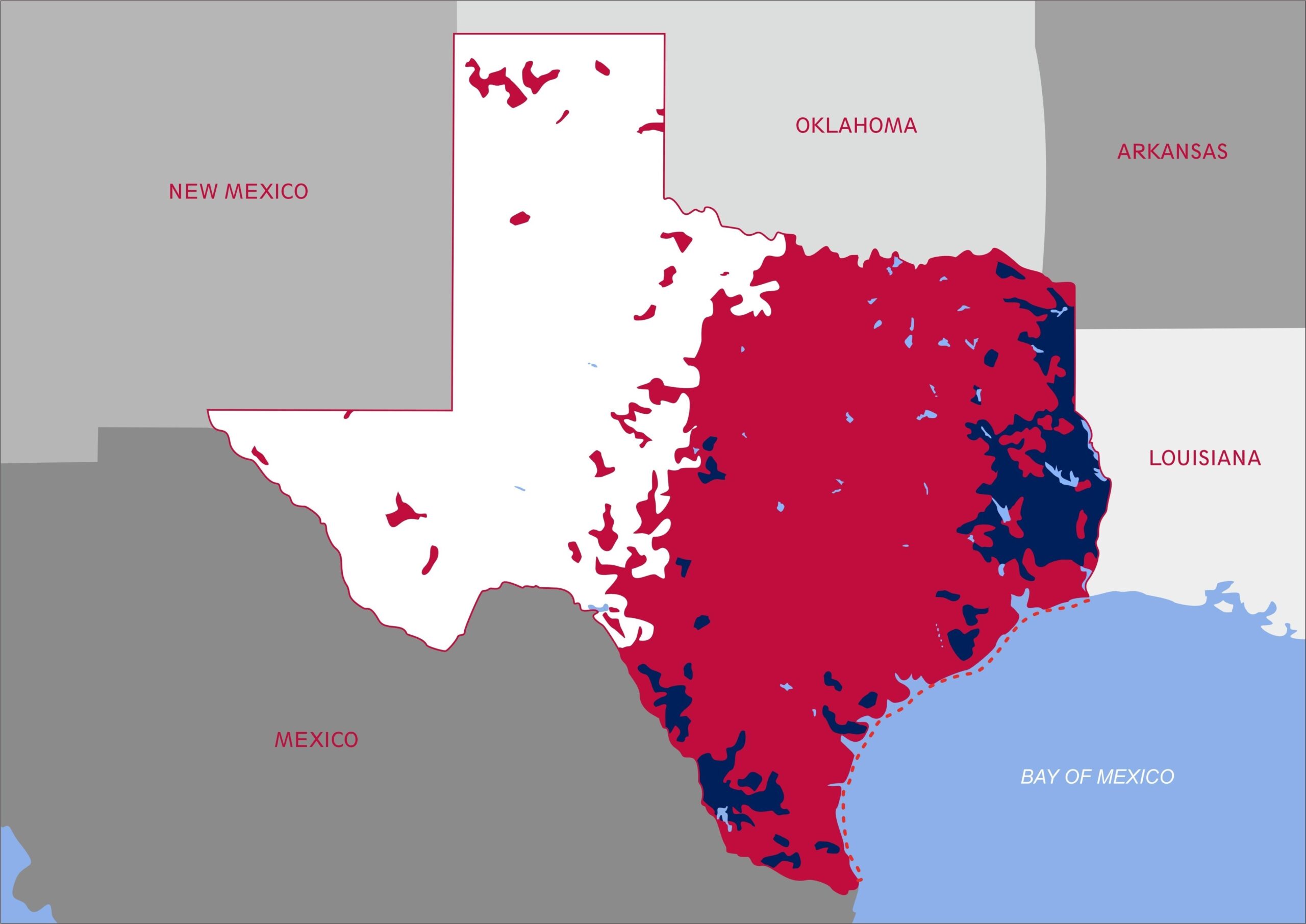
A major federal court ruling has upended Texas politics just as candidates begin filing for the 2026 election cycle. A three-judge panel from the Western District of Texas has ordered the state to use its 2021 congressional district lines for the 2026 elections, blocking a new map passed by Texas Republicans in 2025.
The GOP-drawn map—pushed through by Governor Greg Abbott and backed by former President Donald Trump—sought to expand Republican control of Texas’ 38 House seats from 25 to 30. But the court found that the map relied on unconstitutional racial gerrymandering that weakened the voting strength of Black and Hispanic Texans.
The ruling not only reverses the mid-decade redistricting effort but also signals the beginning of what is likely to be a lengthy court fight, potentially ending up before the U.S. Supreme Court.
Background: A High-Stakes, Mid-Decade Redistricting Push
In August 2025, Republican lawmakers convened a special legislative session with one goal: redraw the congressional map ahead of the 2026 midterms. Governor Abbott signed the new map into law almost immediately.
The move was unusual. Redistricting traditionally happens once a decade after the census, but Republicans opted for a mid-decade redraw—a strategic decision aimed at securing several additional GOP seats.
Supporters portrayed it as a defensive measure. Lawmakers like Senator Phil King warned that losing the Republican majority in the U.S. House could trigger “inquisitions and impeachments,” arguing that the map was necessary to maintain national stability. Critics, however, saw it as a raw power play.
Civil Rights Groups Sue, Alleging Racial Gerrymandering
Civil rights groups, including the NAACP Legal Defense Fund, quickly challenged the 2025 map. They argued the map intentionally diluted the voting power of minority communities by dismantling districts where Black and Hispanic voters formed influential coalitions.
The key evidence in the case included a DOJ letter that instructed Texas lawmakers to break apart minority-coalition districts—guidance the court later called legally faulty and factually unsupported.
After a nine-day trial in El Paso, the court issued a sweeping preliminary injunction. The judges concluded that:
- Race was used improperly in drawing several districts
- Republican lawmakers’ claims of “race-neutral, partisan redistricting” were not credible
- Minority voters faced clear dilution of electoral power
As a result, Texas is temporarily barred from using the 2025 map.
Court Orders the Return to the 2021 Map
The panel’s ruling forces Texas to revert to the congressional lines drawn in 2021. This keeps Republicans at 25 seats instead of the 30 seats they hoped to secure under the rejected 2025 map.
The timing adds to the chaos. The ruling came just as candidate filing began for the March 2026 primaries—throwing campaigns into confusion as candidates scramble to understand which districts they’re actually running in.
Implications for Texas and the National Political Landscape
The ruling is a blow to Texas Republicans and a major win for voting rights advocates.
For GOP leadership
- Their attempt to secure up to 30 seats is off the table for now.
- The ruling disrupts their larger national strategy to solidify U.S. House control.
- They now face a tough legal climb, including likely appeals directly to the Supreme Court.
For Black and Hispanic voters
Civil rights organizations celebrated the ruling as a crucial safeguard, preventing the dilution of minority voting power and ensuring fairer representation for the 2026 cycle.
For national politics
Texas plays an outsized role in the fight for House control. Maintaining the current 2021 map keeps several districts competitive and limits Republican gains going into the midterms.
Legal Uncertainty Ahead
The injunction applies only to the 2026 elections. The underlying lawsuit continues, and the final outcome may hinge on how the Supreme Court rules in upcoming voting rights cases.
Texas has already filed notices of appeal. Because the case comes from a three-judge district court panel, it can go directly to the Supreme Court—raising the odds of a high-profile fight next year.
This ongoing uncertainty complicates planning for:
- Candidates, who may have to prepare for shifting district lines
- Election administrators, who must plan for primaries under maps that could change
- Voters, who may face confusion about which district they belong to
A turbulent, litigation-heavy primary season is now a real possibility.
Summary
The federal court’s order to reinstate Texas’ 2021 congressional map stems from a finding that the 2025 map engaged in racial gerrymandering, violating constitutional protections.
What was meant as a strategic GOP effort to tighten its grip on the House has instead sparked a major legal battle with national implications.